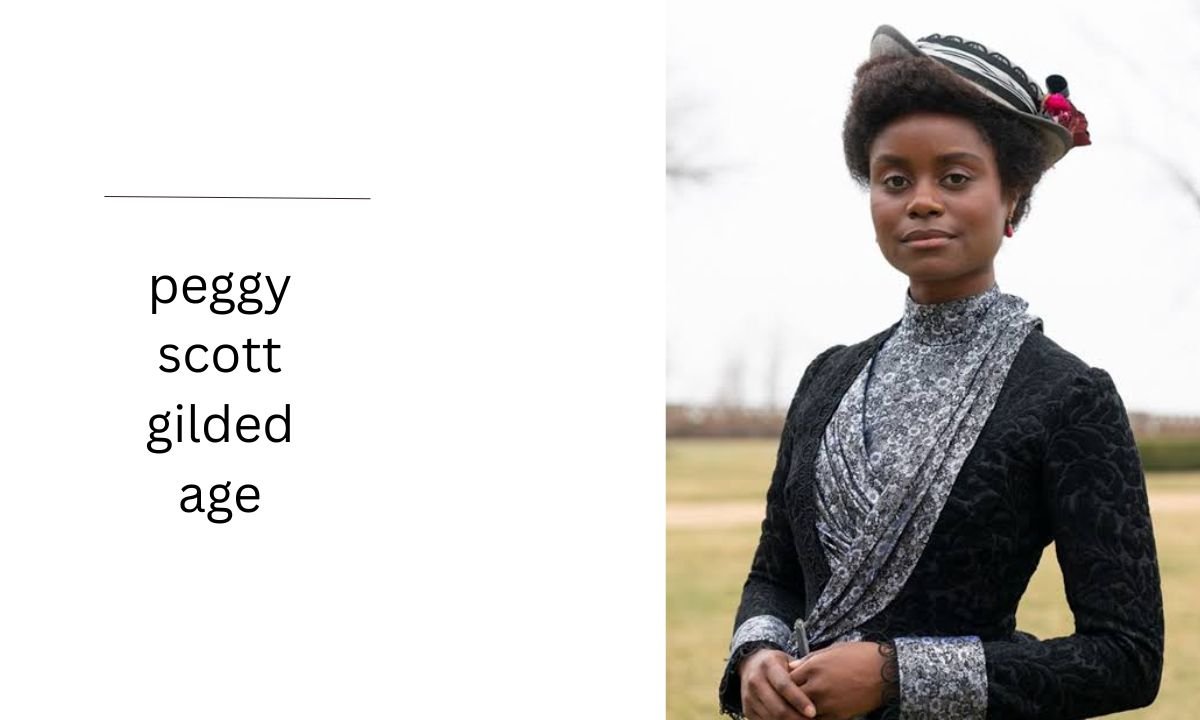
Peggy Scott Gilded Age
zWhen fans talk about Peggy Scott, The Gilded Age, they’re talking about one of the most quietly revolutionary characters on television today. Played by actress Denée Benton, Peggy Scott anchors one of the show’s richest storylines, offering viewers a rare, historically grounded look at Black middle-class life in 1880s New York. Since the very first episode, Peggy Scott from The Gilded Age has stood out not just as a supporting character but as a co-lead whose ambitions, family history, and personal struggles run parallel to — and often eclipse — the drama unfolding in the mansions of Fifth Avenue.
This article breaks down everything there is to know about Peggy Scott, The Gilded Age’s most compelling voice: her family, her education, her journalism career, her relationships, and her lasting impact on the series and its audience.
A quick but important note before diving in: Peggy Scott is a fictional character, not a real historical or living public figure. So while this article follows a detailed biography-style format, everything here reflects her in-story background as written by the show’s creators — not verifiable real-world facts like a legal birth date or a bank-account net worth. With that context set, let’s get into her story.
Early Life and Family
Peggy Scott’s backstory is one of the most carefully constructed elements of The Gilded Age, and it’s central to why Peggy Scott, The Gilded Age, resonates with so many viewers looking for a more complete picture of the era.
- Full name and origin: Within the show, she’s known as Margaret “Peggy” Scott. Her story begins in Brooklyn, New York, placing Peggy Scott of The Gilded Age firmly within a real, historically significant Black community of the period.
- Parents’ professions: Her father, Arthur Scott, is depicted as a successful and respected pharmacist who owns his own shop — a detail the show uses deliberately to push back against one-dimensional portrayals of Black families in period dramas. Her mother, Dorothy Scott, is a devoted homemaker who is fiercely protective of the family’s reputation and stability.
- Family stability and status: Unlike many depictions of Black families from this era in mainstream media, Peggy Scott, The Gilded Age, comes from a financially comfortable, educated household. This was an intentional choice by the show’s writers to reflect the real, often overlooked existence of the 19th-century Black middle and upper-middle class.
- Cultural influences: Peggy grows up steeped in the values of self-improvement, education, and racial uplift that defined many Black communities of the period, drawing on real history including the Black press, mutual aid societies, and church-centered social life.
- Early challenges: Despite her family’s relative privilege, Peggy Scott from The Gilded Age still faces the everyday realities of racism in post–Civil War America, along with a painful personal secret from her past involving an earlier relationship and a child — a storyline that shapes much of her early arc.
- Sibling and extended family dynamics: The show explores tension between Peggy and her parents, particularly her father, over her independence, her writing career, and her refusal to live according to the more cautious, safety-first expectations placed on her.
| Aspect | Details |
|---|---|
| Character full name | Margaret “Peggy” Scott |
| Father | Arthur Scott, pharmacist and shop owner |
| Mother | Dorothy Scott, homemaker |
| Hometown (in-story) | Brooklyn, New York |
| Family social class | Black middle/upper-middle class |
| Key early-life challenge | A hidden past relationship and separation from her child |
Education
Education is a defining thread in the story of Peggy Scott, The Gilded Age, reflecting the real emphasis many Black families of the era placed on schooling as a path to opportunity and dignity.
- Foundational schooling: Peggy is portrayed as well-read and highly literate from a young age, a reflection of her parents’ investment in her intellectual development.
- Higher education background: The show establishes that Peggy attended a teaching institution, aligning with the real historical role that institutions for Black students played in producing teachers, writers, and community leaders in the post-Reconstruction era.
- Academic strengths: Her natural talent lies in writing and storytelling, which becomes obvious early in the series and sets up her later career.
- Extracurricular pursuits: Beyond formal schooling, Peggy is shown reading voraciously and engaging with contemporary Black newspapers and literature, essentially self-directing an ongoing education in journalism and current events.
- Family expectations around education: Her parents, especially her father, hoped her education would lead to a “respectable” and stable profession like teaching — creating friction when Peggy instead pursues the far less secure and more publicly visible path of journalism.
- Age and timing: The show doesn’t give an exact graduation age for Peggy Scott, The Gilded Age, but she’s presented as a young adult, likely in her early-to-mid twenties, when the series begins and her writing career starts to take shape.
Career
The career arc is arguably the heart of the Peggy Scott, The Gilded Age, storyline, tracking her evolution from an aspiring writer into a published, respected journalist.
- Career beginnings: Peggy starts the series working as a secretary and companion in the van Rhijn household, a job that gives her financial independence while she works on her writing on the side.
- First big break: She begins submitting essays and stories for publication, facing repeated rejection tied directly to the racism of the publishing industry at the time — a realistic obstacle the show doesn’t shy away from.
- The New York Globe: A major turning point for Peggy Scott, The Gilded Age, comes when she starts writing for the New York Globe, working alongside T. Thomas Fortune, a real historical journalist and civil rights figure the show incorporates into Peggy’s fictional career.
- Growing recognition: Over the course of the series, Peggy’s writing earns her increasing respect, both within the Black press community and, gradually, in wider social circles connected to the van Rhijn and Brook families.
- Balancing two worlds: Much of her career arc involves navigating both elite white society (through her employment and friendship with Marian Brook) and her own community and ambitions, a duality that defines the show’s treatment of Peggy Scott, The Gilded Age.
- Ongoing development: As the series continues across multiple seasons, Peggy’s career expands further, with the show continuing to use her journalism as a lens for exploring real historical events and figures of the 1880s.
| Year (In-Story/Season) | Milestone | Description |
|---|---|---|
| Season 1 | Joins the van Rhijn household | Peggy begins working as Agnes van Rhijn’s secretary while pursuing writing |
| Season 1 | Early rejections | Faces repeated rejection from publishers due to racial bias |
| Season 1–2 | Joins the New York Globe | Begins writing for a real Black-owned newspaper, working with T. Thomas Fortune |
| Season 2 | Deeper personal storyline revealed | Her past relationship and separation from her child come further into focus |
| Season 2–3 | Romantic relationship with William Kirkland | Introduces new class and colorism dynamics within Black high society |
| Ongoing | Continued rise as a journalist | Her writing career and personal life continue developing across the series |
Relationships and Controversies
Relationships add emotional depth to Peggy Scott, The Gilded Age, and have generated plenty of discussion among fans of the show.
- Past relationship and hidden child: One of the earliest major reveals about Peggy is a previous relationship that resulted in a child she was separated from — a storyline that adds significant emotional weight to her character.
- Romance with Dr. William Kirkland: A central relationship for Peggy Scott, The Gilded Age, is her romance with William Kirkland, a Black physician from a prominent, wealthy Southern family.
- Class and colorism themes: The relationship with Kirkland introduces storylines around colorism and class divisions within Black communities of the period, giving the show a layer of nuance rarely explored in mainstream period dramas.
- Family tension: Peggy’s relationship with her parents, particularly her father Arthur, remains a recurring source of conflict, especially around her independence and career choices.
- Fan and critical reception: Peggy Scott, The Gilded Age, has been widely praised by critics and viewers for offering a fuller, more textured portrayal of Black life in the Gilded Age than is typical for the genre.
- Public discussion points: Much of the “controversy” around the character isn’t scandal in the tabloid sense, but rather engaged debate among viewers and historians about how accurately and thoughtfully the show handles race, class, and history through her story.
Cultural Value and Impact (In Place of Net Worth)
Since Peggy Scott is a fictional character, she doesn’t have a real net worth, income, or assets. Instead, here’s a look at her impact and “value” to the show itself, which is a more meaningful way to measure the significance of Peggy Scott, The Gilded Age.
| Category | Details |
|---|---|
| Narrative importance | One of the show’s central storylines, running parallel to the main society plot |
| Historical value | Introduces real figures like T. Thomas Fortune and real Black press history |
| Critical reception | Frequently singled out by critics as one of the strongest threads of the series |
| Fan engagement | Regularly among the most-discussed characters in online fan communities |
| Representation impact | Offers rare screen depiction of the historical Black middle/upper class |
Other Ventures
While the character herself doesn’t have “brand deals” or side ventures, Peggy Scott, The Gilded Age, has generated real-world attention beyond the show itself.
- Fan communities: Peggy Scott has an active online fan base, with dedicated discussion threads analyzing her storylines each season.
- Merchandise and media coverage: The character regularly appears in official The Gilded Age promotional material, interviews, and press coverage.
- Academic and cultural commentary: Historians and cultural critics have written about how Peggy Scott, The Gilded Age, reflects real 19th-century Black history, making her a frequent reference point in broader conversations about representation on television.
- Crossover interest: Her storyline has drawn interest from viewers who might not typically watch period dramas, expanding the show’s audience.
- Educational use: Some educators have used Peggy’s storyline as a jumping-off point for discussing real Black history of the Reconstruction and Gilded Age eras.
Charitable Work and Real-World Historical Significance
Peggy Scott doesn’t engage in “charitable work” in the way a real celebrity might, but her storyline does meaningful cultural work of its own.
- Historical education: By weaving in real figures like T. Thomas Fortune, Peggy Scott, The Gilded Age, helps introduce viewers to lesser-known but important history.
- Representation as impact: The character’s very existence contributes to a broader push in media for more complete, dignified portrayals of Black history.
- Community reflection: Peggy’s family and social world reflect real historical institutions — Black-owned businesses, newspapers, and social organizations — that many viewers may not have previously known about.
- Inspiring discussion: The show’s handling of Peggy has sparked broader conversations about race, class, and journalism history well beyond the fictional plot itself.
- Legacy within the series: As the show continues, Peggy Scott, The Gilded Age, remains a key vehicle for exploring themes of ambition, identity, and history side by side with the more traditional “upstairs” drama.
Frequently Asked Questions
Q1: How old is Peggy Scott in the current season of The Gilded Age? The show doesn’t give Peggy Scott an exact age, but she’s portrayed as a young adult, likely in her mid-to-late twenties as the series progresses.
Q2: Who is Peggy Scott in a relationship with? Peggy Scott’s most significant romantic relationship in the show is with Dr. William Kirkland, a Black physician from a prominent Southern family.
Q3: What is Peggy Scott’s net worth? Since Peggy Scott is a fictional character, she doesn’t have a real-world net worth. Within the story, her family is financially comfortable thanks to her father’s success as a pharmacist.
Q4: What does Peggy Scott do for a living? Peggy Scott works as a journalist and writer, notably contributing to the historical Black newspaper the New York Globe, after starting out as a secretary for the van Rhijn household.
Q5: Does Peggy Scott have any children? Yes — one of the show’s major early reveals is that Peggy had a child from a previous relationship before the start of the series, a storyline that significantly shapes her arc.
From her fictional roots in Brooklyn to her hard-won place in the world of 19th-century Black journalism, Peggy Scott, The Gilded Age, remains one of the show’s most powerful reminders that history is richer and more layered than the ballrooms of Fifth Avenue alone. Whether you’re a devoted fan or new to the series, her story is well worth following.